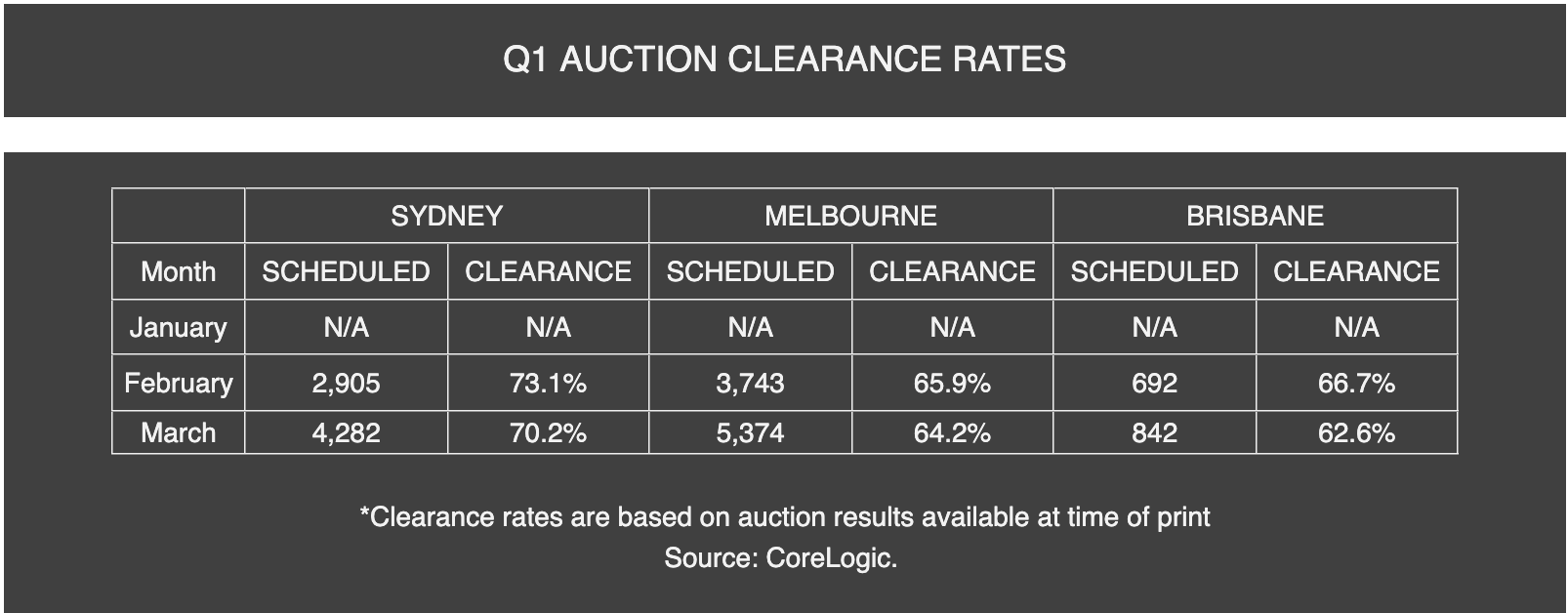
Greetings from Scoutable and welcome to our Quarterly Wrap Up.
I hope you are well.
Cash Rate
The Reserve Bank of Australia (RBA) maintained the cash rate at 4.35% during its March meeting. RBA will meet next in early May. Reflecting the uncertainty amongst experts surrounding future monetary policy decisions, according to the ASX RBA Rate Tracker, while one in 10 traders anticipates a cut to 4.10% in the upcoming May meeting, leading economists at CommBank and Westpac project the first cut to occur in September, with ANZ and NAB predicting a later adjustment in November.
Westpac's analysis of the RBA minutes underscores the cautious optimism prevailing among policymakers. The Board's decision to keep the cash rate unchanged reflects a delicate balance between economic indicators and policy objectives. Notably, the Board's endorsement of maintaining ample reserves underscores its commitment to supporting economic recovery while ensuring monetary stability.
Market Update
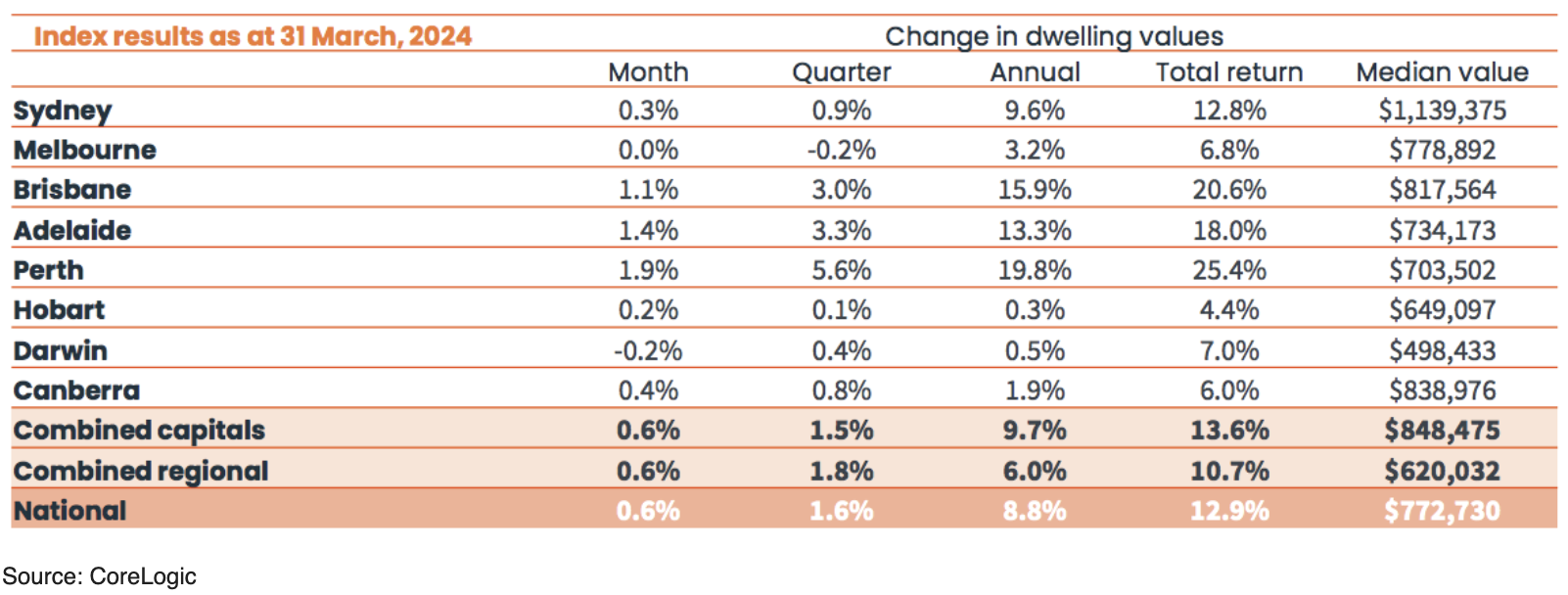
In March, CoreLogic's national Home Value Index (HVI) displayed steady growth, rising by 0.6%, maintaining momentum from February and marking the 14th consecutive month of increased housing values. Since its decline of -7.5% between April 2022 and January 2023, the national HVI has surged by 10.2%, equivalent to approximately $71,832, reaching new record highs every month since November of last year.
The national quarterly growth rate accelerated from 1.4% in Q4 2023 to 1.6% in Q1 2024, although halving compared to mid-last year's 3.3% quarter-on-quarter growth. Tim Lawless, CoreLogic's research director, attributed softer housing conditions since mid-last year to factors such as rate hikes, cost of living pressures, and worsening affordability. Nonetheless, the undersupply of housing relative to demand continues to fuel the growth of home values.
The lower value sector is gaining momentum in major capitals, reflecting affordability concerns. Regional markets, except for Regional Victoria, experienced value rises.
Despite challenges, the market is navigating the high interest rate and cost of living environment better than anticipated. Broad-based rises in values has been observed, with a positive outlook amid expectations of interest rate reductions later in the year, potentially boosting borrowing capacity and consumer sentiment. However, affordability issues and economic uncertainties persist. The housing market shows continued resilience, however, supply-demand imbalances and affordability concerns are crucial factors for the market performance moving forward.
Rental Update
Rental prices surged by 2.8% in the March quarter, the fastest quarterly growth since May 2022. This upward trend, observed since October last year, indicates more than just seasonal fluctuations.
Unit rents outpaced house rents, rising by 2.9% and 2.7% respectively in the March quarter, though the gap between them is narrowing gradually.
Rental yields are on the rise, reaching 3.75% nationally, the highest since October 2019. Melbourne witnessed a significant increase in gross rental yields, from 2.76% two years ago to 3.57% in March 2024.
This rise in rental yields, alongside expectations of continued growth in housing values, presents an attractive opportunity for property investors, despite challenges posed by mortgage rates.
Investors have shown increased activity, with lending values up by 18.5% over the 12 months ending January 2024, compared to a 3.4% rise in owner-occupier lending, according to housing finance data.
The rental market exhibits robustness, with rising rents and yields attracting investor interest, despite challenges posed by mortgage rates and deposit requirements.
Government News
The Federal Government has announced significant changes to Foreign Investment Review Board's foreign investment framework to address housing supply issues:
1. Increased Fees for Established Dwellings - Application fees for purchasing established dwellings will triple, encouraging investment in new developments.
2. Doubling Vacancy Fees - Vacancy fees for foreign-owned dwellings purchased after May 9, 2017, will double, discouraging properties from remaining vacant.
3. Promoting Build-to-Rent (BTR) Projects - Application fees for BTR projects will match the lowest commercial fee level, incentivising investment in residential rental developments.
These changes are expected to take effect from April 1, 2024, or upon receiving Royal Assent.
The aim is to redirect foreign investment towards new housing developments, increase rental availability, and support economic growth. This reflects the government's commitment to addressing housing affordability and increasing housing supply.
If you would like to discuss the property market further, please get in touch.
Until next quarter,
Kellie Landrey | Principal Buyers Agent