Greetings from Scoutable and welcome to our Quarterly Wrap Up.
I hope you are well.
Cash Rate
At its September meeting, the Reserve Bank of Australia left the cash rate at 4.35%. The Reserve Bank will hold its next meeting in early November. This decision aligns with expectations from traders and economists, despite increasing calls from some community members for a rate cut, especially following significant rate cuts by the US Federal Reserve and other countries.
Inflation in Australia remains above the RBA's target, with underlying inflation at 3.9%. Governor Michele Bullock emphasised the need for more evidence of declining inflation before considering cuts, highlighting the ongoing strength in the labour market.
Political pressure is mounting, with criticisms from Treasurer Jim Chalmers and former RBA Governor Bernie Fraser regarding the impact of high rates on the economy. However, Bullock stated that the RBA’s focus is on managing inflation without raising unemployment significantly.
Market economists expect rates to remain steady through the end of the year, with cuts possibly not occurring until 2025 due to persistent inflation. Concerns were also raised about government spending adding inflationary pressure, indicating a need for careful economic management.
MARKET UPDATE
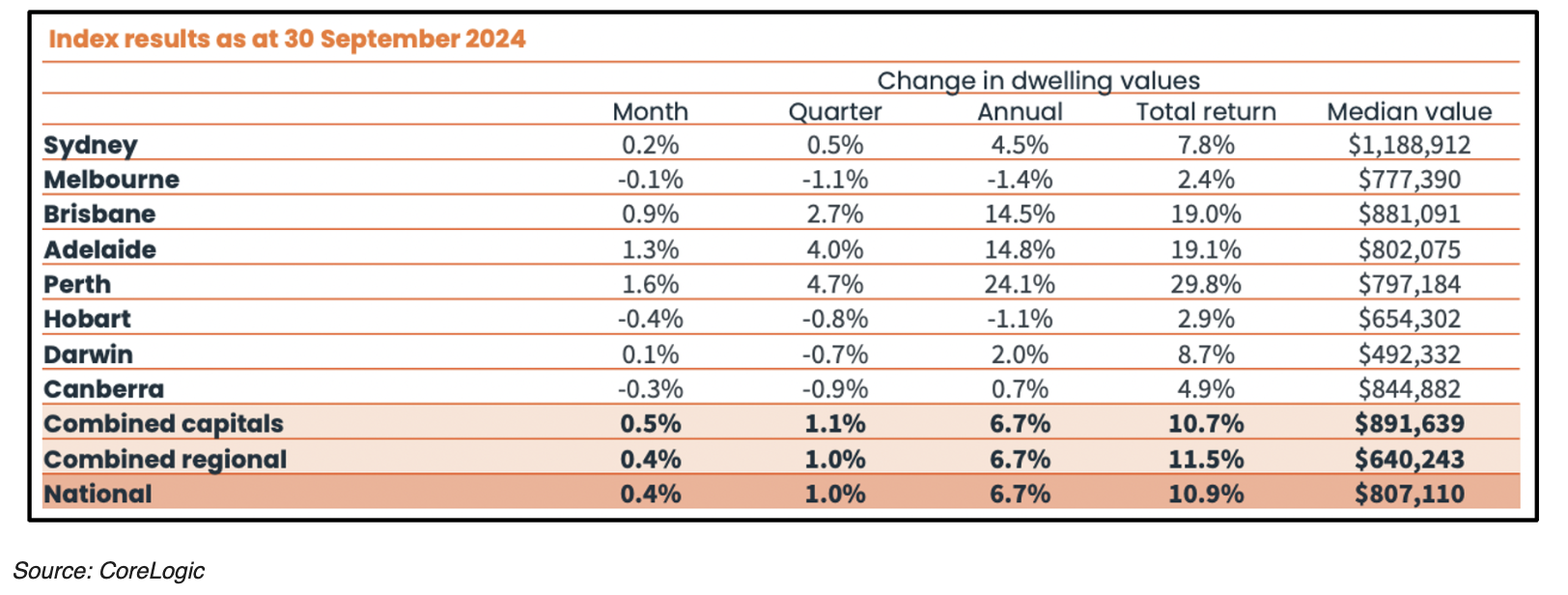
Summary of CoreLogic’s Hedonic Home Value Index, which was released on the 1st October, is given below.
CoreLogic’s national Home Value Index (HVI) rose 1% in the September quarter, marking the slowest growth since March 2023. In the first month of spring, dwelling values increased modestly by 0.4%, consistent with the previous two months. Some capital cities, notably Melbourne, saw quarterly declines in values, while Sydney's growth slowed to 0.5%. Mid-sized capitals like Perth and Adelaide are leading the gains, but overall momentum is waning.
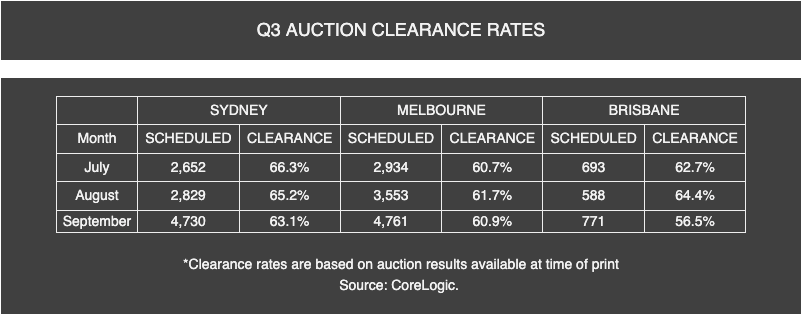
The market is seeing an increase in new listings, up 3.2% year-over-year, indicating a busy selling season. However, auction clearance rates are currently in the low 60% range across the combined capital cities, around 4% below the decade average. Selling times have lengthened, with an average of 32 days nationally in the September quarter (up from 29 days in the June Quarter). Both time on market and lower auction clearance rates are suggesting softer vendor conditions. Lower-priced homes have shown stronger value increases compared to higher-end properties, highlighting affordability challenges across the board.
The national rental index rose only 0.1% in the September quarter, marking the smallest increase in four years. Several cities, including Sydney (-0.5%), Brisbane (-0.2%), and Canberra (-0.8%), experienced reduction in rentals, while Melbourne and Perth saw minimal rises of 0.3%. This slowdown is attributed to decreased net overseas migration—down 19% from early 2023—and rental affordability issues, prompting shifts in demand.
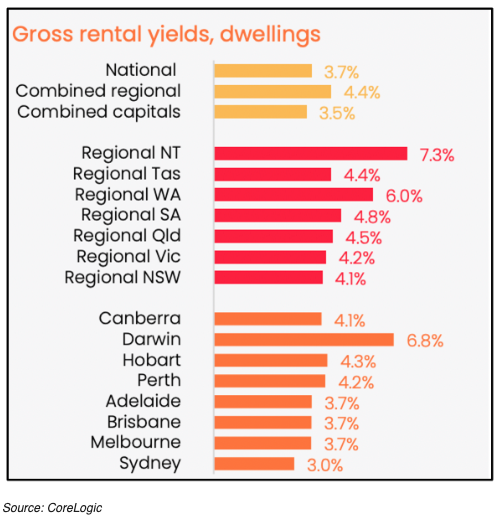
Affordability pressures mean that median-income households are spending about a third of their income on rent. As a result, larger group and multigenerational households are becoming more common. Notably, rental growth has lagged behind home value increases for five consecutive months, which is putting downward pressure on rental yields, which have dropped to 3.68%, the lowest since December 2023. With average variable mortgage rates at 6.6%, many recent investors are likely facing cash flow losses on their properties unless they have low levels of debt.
Looking ahead, housing values may continue to rise at the macro level, but diverse trends are emerging across cities. Positive factors include improving sentiment, potential interest rate cuts, and ongoing housing supply constraints. However, affordability remains a significant issue. CoreLogic noted:-
Housing remains unaffordable across every metric. The portion of household income required to service a new mortgage for the median income household was at record highs in the June quarter at 50.3%. The dwelling value to income ratio, at 7.9, is only marginally lower than record highs and it would take 10.6 years for a household on the median income to save a 20% deposit to buy the median value dwelling (if they can save 15% of their income each year).
A tightening credit environment could pose risks, and rising listings might give buyers more leverage.
Lastly, in September, we had a casual chat on our thoughts on the market with our good friends at Pure Finance, you can read the article here.
If you would like to discuss the property market further, please get in touch.
Until next quarter,
Kellie Landrey | Principal Buyers Agent